
By Fadhili Omasaba
The Competency-Based Curriculum (CBC) was introduced in Kenya with the promise of revolutionizing education by focusing on skills rather than rote memorization. However, as Grade 10 students, teachers, and parents navigate this transition, confusion and uncertainty cloud the system’s effectiveness. The major question remains: Is CBC truly on the right path, or is it an ambitious idea facing serious structural challenges?
The Uncertainty in Grade 10: Where Are We Headed?

Grade 10 is a crucial year in CBC as it marks the beginning of senior secondary education. Ideally, students should be specializing in pathways that align with their strengths, interests, and career aspirations. However, most parents, teachers, and even learners are in the dark about the selection process, the availability of necessary infrastructure, and the preparedness of schools to accommodate the different learning areas.
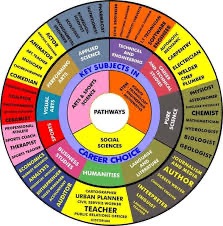
A report by Kenya Institute of Curriculum Development (KICD, 2023) acknowledges that while the CBC system intends to develop holistic learners, its implementation has been marred by logistical challenges, including a shortage of trained teachers, inadequate infrastructure, and lack of clear guidelines on transition processes. Many schools lack the facilities to support technical and vocational pathways, meaning that learners may be forced into choices dictated by school limitations rather than their interests.
Teachers, the key implementers of CBC, are also struggling with a curriculum that demands more than they were trained for under the 8-4-4 system. A 2024 Kenya National Union of Teachers (KNUT) report highlights that over 60% of teachers feel ill-prepared to deliver competency-based learning effectively, citing insufficient training and overwhelming workload. This begs the question: How can a system thrive if its key drivers—educators—are not adequately equipped?
Essential Learning Areas: What Should Every Learner Gain?
Amidst the CBC debate, it is important to ask: What learning areas are essential for any student, regardless of the curriculum? Globally, successful education systems prioritize competencies that align with 21st-century demands. The World Economic Forum (2020) outlined key skills necessary for future careers, which include:
- Literacy and Numeracy – These remain fundamental. Regardless of a learner’s pathway, strong reading, writing, and mathematical skills are non-negotiable.
- Critical Thinking and Problem-Solving – An education system must equip learners with the ability to analyze, evaluate, and innovate.
- Communication and Collaboration – The modern world demands strong interpersonal skills and the ability to work effectively in teams.
- Digital Literacy – With the increasing role of technology, learners must be proficient in digital tools and online platforms.
- Entrepreneurial and Financial Literacy – Kenya’s economy requires self-reliant individuals who can create jobs rather than wait for them.
- Emotional Intelligence and Adaptability – Mental resilience and flexibility are key traits in a fast-changing world.
- Technical and Vocational Skills – Practical skills that match industry needs should be emphasized, especially given Kenya’s high youth unemployment rate.
CBC aims to address most of these competencies, but the challenge is in the execution. The government must ensure that the transition into Grade 10 is smooth and inclusive. If students are to specialize, schools must be equipped with the necessary resources, and teachers must be adequately trained. Otherwise, CBC risks becoming another well-intentioned but poorly executed policy.
The Way Forward
To salvage the CBC system, the Ministry of Education must:
- Enhance teacher training – No curriculum can succeed without well-trained educators. Comprehensive CBC training should be continuous and well-funded.
- Invest in school infrastructure – Senior secondary schools need proper facilities for different pathways. This includes labs, workshops, and ICT centers.
- Provide clear transition guidelines – Parents and students need clarity on subject selection, career pathways, and school placement.
- Involve stakeholders in decision-making – Teachers, parents, and students should be actively engaged in curriculum reviews and policy decisions.

Kenya stands at a crossroads in its education journey. CBC has potential, but without urgent interventions, the confusion surrounding Grade 10 and beyond may undermine its effectiveness. It is time for the government to address these challenges before CBC becomes another failed experiment in Kenya’s education history.

 Fadhili Elly
Leave a comment